


How to Prepare for Survival Horror Games

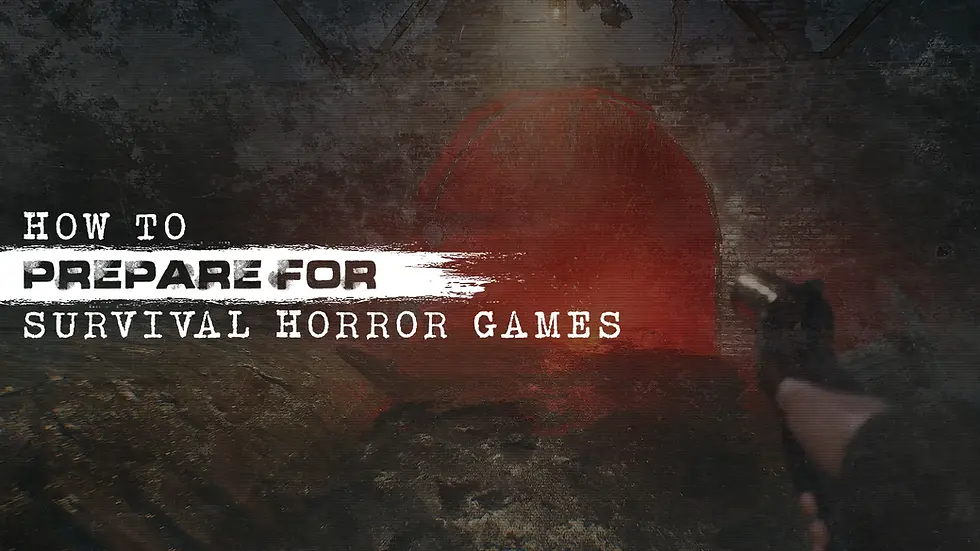
The hallway is quiet. Too quiet. Your flashlight catches a child’s bicycle against peeling wallpaper, and somewhere beyond the next door, something shifts its weight. To learn how to prepare for survival horror, start by accepting the genre’s central rule: discomfort is not a mistake. It is the pressure that makes every locked door, missing fuse, and distant sound matter.
Survival horror asks for a different mindset than an action game. You are not there to clear every room at speed or prove that every enemy can be beaten. You are there to stay alive long enough to understand what happened, what is hunting you, and where the next safe path might be.
How to Prepare for Survival Horror Games Before You Start
A good session begins before the opening cutscene. Give yourself enough uninterrupted time to settle into the game’s pace. Survival horror often builds dread through small details: a radio transmission cutting out, an empty diner with one light still on, a note that turns an ordinary local rumor into something much worse. Rushing through those moments can make the experience feel frustrating rather than tense.
Play with headphones if you can. Directional audio is not decoration in this genre. It can reveal an enemy behind a wall, a clue hidden in a room, or the difference between harmless machinery and an approaching threat. Keep the volume at a level that lets you hear subtle environmental sound without turning every sting into an assault.
It also helps to set expectations honestly. Some survival horror games favor combat; others make confrontation costly or nearly impossible. Some are built around elaborate puzzles, while others reward careful observation and investigation. Read the game’s opening instructions, notice what it gives you, and let those systems tell you how cautious to be. A single handgun with six rounds means something very different from a full arsenal.
Treat Resources Like Future Escape Routes
The classic survival-horror mistake is using supplies to make the present moment easier without considering the next one. Ammunition, batteries, healing items, crafting materials, and save resources are not merely inventory objects. They are options you may need when the game finally corners you.
That does not mean hoarding everything until the credits. Saving every healing item while limping through dangerous areas is not strategy. The better question is: what does this resource buy me right now? If using one shell lets you escape a grab, preserve health, and reach a checkpoint, use it. If firing five rounds at a creature that can be avoided costs more than it saves, leave it in the dark.
Build a simple rhythm whenever you find a safe room, storage box, or quiet place to breathe. Check your health, reload only when it makes sense, combine partial stacks if the game allows it, and place specialized items where you can find them later. The goal is not a perfect inventory. It is an inventory you understand under pressure.
Pay attention to what the game keeps giving you. A steady supply of healing items may signal an encounter ahead. An abundance of batteries suggests that darkness is about to become a mechanical problem, not just an atmospheric one. If the game offers a bolt cutter, a strange key, or a frequency scanner, do not dismiss it as clutter. It is probably a promise that an earlier locked path is about to matter.
Learn When Not to Fight
Survival horror becomes far more manageable when you stop treating enemies as chores. Many threats are designed to be bypassed, distracted, stunned, or temporarily driven back. The cleanest victory may be slipping through a loading dock unseen, not leaving a trail of bodies behind you.
Before attacking, take a few seconds to study behavior. Does the enemy patrol? Does it react to light, sound, movement, or line of sight? Can it open doors? Does it remain down after a hit, or does it recover while you waste precious ammunition? Those answers turn panic into a plan.
Stealth works best when you think about exits first. Do not creep into a room just because it looks clear. Identify where you will run if the patrol turns, where you can break sightlines, and whether the door behind you locks automatically. In cramped spaces, moving slowly can be safer than sprinting. In open spaces, speed may be your only protection. It depends on the threat and the terrain.
This is where an indie sci-fi survival-horror setting can become especially unnerving. A dark forest trail, an abandoned facility, or a familiar small-town street may offer no obvious cover at all. In Pine Creek, the safest-looking place may still hold a clue, a witness to a disappearance, or an extraterrestrial danger waiting just beyond the beam of a flashlight.
Make a Habit of Reading the Environment
The strongest survival-horror games rarely explain every answer directly. They put information into the world and trust you to notice it. A calendar with dates circled in red, mud leading away from a shattered window, a map with one street aggressively crossed out - these details can be more useful than a waypoint.
When you enter a new area, pause at the threshold. Look for locked doors, interactable objects, escape routes, power sources, symbols, and anything that feels out of place. Then explore in a loose circle instead of walking straight toward the most obvious objective. Side rooms often contain the supplies or context that make the main route survivable.
Keep short notes if the game does not track clues for you. You do not need a detective’s corkboard. Write down combinations, names, repeated imagery, and places that require a tool you do not yet have. This is particularly useful in stories built around local history, secret experiments, strange broadcasts, and fractured eyewitness accounts. The solution to a puzzle may have been sitting in a newspaper clipping an hour ago.
Environmental reading also protects you from false certainty. A blood trail can point toward an objective, but it can also lead directly into an ambush. A light in a distant house may mean shelter, or it may mean someone wants to be found. Let the setting create suspicion, but do not let it freeze you in place.
Manage Fear Without Killing the Mood
Fear is part of the purchase. The aim is not to make yourself numb to it, but to keep it from turning every decision into a frantic guess. If your hands tense up after a chase, stop somewhere safe and reset. Check the map. Review your objective. Take one deliberate action instead of racing toward the first open door.
A useful trick is to separate sound from danger. The score may swell, pipes may groan, and something may scrape behind a wall. Not every unsettling noise requires you to fire, flee, or reload a save. Listen for patterns. Games often use atmosphere to make you anticipate danger before it arrives. That anticipation is the point.
If a section becomes too intense, adjust your approach before adjusting the experience. Lowering sensitivity can improve aim. Increasing brightness slightly may help you read navigation cues, though too much can flatten carefully built darkness. Accessibility settings, difficulty options, subtitles, and control remapping exist to help you stay engaged with the horror rather than fight the interface.
Save With Intent, Not Just Relief
Saving is a survival mechanic when checkpoints are limited. A save before a major door, puzzle room, or suspected boss arena can protect a run. But avoid saving only when you are low on health and resources if that leaves you trapped in an impossible state. When you can, make a backup save before committing to a dangerous route or using a rare item.
After a difficult encounter, resist the urge to assume the game is finished with that area. Search it calmly. Boss rooms and chase routes often hide ammunition, documents, upgraded tools, or story details that were impossible to see while you were running for your life.
Most of all, let setbacks teach you something specific. If an enemy catches you, ask whether you missed an escape path, used light carelessly, entered with too little health, or simply needed to wait for a patrol to move. Death is unpleasant, but it can reveal the rules of a place that wants you confused.
The best preparation for survival horror is patience sharpened by curiosity. Move carefully, save what matters, and notice the details everyone else would ignore. When the town goes quiet and the road disappears into the trees, that attention may be the only thing that gets you home.

Comments